LMMS
Loading...
Searching...
No Matches
juce::JUCEApplicationBase Class Referenceabstract

#include <juce_ApplicationBase.h>

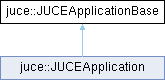
Inheritance diagram for juce::JUCEApplicationBase:
juce::JUCEApplication

Classes

struct  MultipleInstanceHandler

Public Types

using CreateInstanceFunction = JUCEApplicationBase* (*)()

Public Member Functions

virtual ~JUCEApplicationBase ()
virtual const String getApplicationName ()=0
virtual const String getApplicationVersion ()=0
virtual bool moreThanOneInstanceAllowed ()=0
virtual void initialise (const String &commandLineParameters)=0
virtual void shutdown ()=0
virtual void anotherInstanceStarted (const String &commandLine)=0
virtual void systemRequestedQuit ()=0
virtual void suspended ()=0
virtual void resumed ()=0
virtual void unhandledException (const std::exception *, const String &sourceFilename, int lineNumber)=0
virtual void memoryWarningReceived ()
virtual bool backButtonPressed ()
void setApplicationReturnValue (int newReturnValue) noexcept
int getApplicationReturnValue () const noexcept
bool isInitialising () const noexcept
virtual bool initialiseApp ()
int shutdownApp ()
bool sendCommandLineToPreexistingInstance ()

Static Public Member Functions

static JUCEApplicationBasegetInstance () noexcept
static void quit ()
static StringArray JUCE_CALLTYPE getCommandLineParameterArray ()
static String JUCE_CALLTYPE getCommandLineParameters ()
static bool isStandaloneApp () noexcept
static int main ()
static int main (int argc, const char *argv[])
static void appWillTerminateByForce ()
static void JUCE_CALLTYPE sendUnhandledException (const std::exception *, const char *sourceFile, int lineNumber)

Static Public Attributes

static CreateInstanceFunction createInstance = nullptr

Protected Member Functions

 JUCEApplicationBase ()

Private Attributes

int appReturnValue = 0
bool stillInitialising = true
std::unique_ptr< MultipleInstanceHandlermultipleInstanceHandler

Static Private Attributes

static JUCEApplicationBaseappInstance = nullptr

Detailed Description

Abstract base class for application classes.

Note that in the juce_gui_basics module, there's a utility class JUCEApplication which derives from JUCEApplicationBase, and takes care of a few chores. Most of the time you'll want to derive your class from JUCEApplication rather than using JUCEApplicationBase directly, but if you're not using the juce_gui_basics module then you might need to go straight to this base class.

Any application that wants to run an event loop must declare a subclass of JUCEApplicationBase, and implement its various pure virtual methods.

It then needs to use the START_JUCE_APPLICATION macro somewhere in a CPP file to declare an instance of this class and generate suitable platform-specific boilerplate code to launch the app.

e.g.

class MyJUCEApp : public JUCEApplication
{
public:
MyJUCEApp() {}
~MyJUCEApp() {}
void initialise (const String& commandLine) override
{
myMainWindow.reset (new MyApplicationWindow());
myMainWindow->setBounds (100, 100, 400, 500);
myMainWindow->setVisible (true);
}
void shutdown() override
{
myMainWindow = nullptr;
}
const String getApplicationName() override
{
return "Super JUCE-o-matic";
}
const String getApplicationVersion() override
{
return "1.0";
}
private:
std::unique_ptr<MyApplicationWindow> myMainWindow;
};
// this generates boilerplate code to launch our app class:
static void shutdown(void)
Definition adplugdb.cpp:297
Definition String.h:48
Definition juce_Application.h:92
#define START_JUCE_APPLICATION(AppClass)
Definition juce_Initialisation.h:159
See also
JUCEApplication, START_JUCE_APPLICATION

@tags{Events}

Member Typedef Documentation

◆ CreateInstanceFunction

using juce::JUCEApplicationBase::CreateInstanceFunction = JUCEApplicationBase* (*)()

Constructor & Destructor Documentation

◆ JUCEApplicationBase()

juce::JUCEApplicationBase::JUCEApplicationBase ( )
protected

◆ ~JUCEApplicationBase()

juce::JUCEApplicationBase::~JUCEApplicationBase ( )
virtual

Destructor.

Member Function Documentation

◆ anotherInstanceStarted()

virtual void juce::JUCEApplicationBase::anotherInstanceStarted ( const String & commandLine)
pure virtual

Indicates that the user has tried to start up another instance of the app.

This will get called even if moreThanOneInstanceAllowed() is false. It is currently only implemented on Windows and Mac.

See also
moreThanOneInstanceAllowed

Implemented in juce::JUCEApplication.

◆ appWillTerminateByForce()

void juce::JUCEApplicationBase::appWillTerminateByForce ( )
static

◆ backButtonPressed()

virtual bool juce::JUCEApplicationBase::backButtonPressed ( )
inlinevirtual

This will be called when the back button on a device is pressed. The return value should be used to indicate whether the back button event has been handled by the application, for example if you want to implement custom navigation instead of the standard behaviour on Android.

This is currently only implemented on Android devices.

Returns
true if the event has been handled, or false if the default OS behaviour should happen

◆ getApplicationName()

virtual const String juce::JUCEApplicationBase::getApplicationName ( )
pure virtual

Returns the application's name.

◆ getApplicationReturnValue()

int juce::JUCEApplicationBase::getApplicationReturnValue ( ) const
inlinenoexcept

Returns the value that has been set as the application's exit code.

See also
setApplicationReturnValue

◆ getApplicationVersion()

virtual const String juce::JUCEApplicationBase::getApplicationVersion ( )
pure virtual

Returns the application's version number.

◆ getCommandLineParameterArray()

StringArray juce::JUCEApplicationBase::getCommandLineParameterArray ( )
static

Returns the application's command line parameters as a set of strings.

See also
getCommandLineParameters

◆ getCommandLineParameters()

String juce::JUCEApplicationBase::getCommandLineParameters ( )
static

Returns the application's command line parameters as a single string.

See also
getCommandLineParameterArray

◆ getInstance()

JUCEApplicationBase * juce::JUCEApplicationBase::getInstance ( )
inlinestaticnoexcept

Returns the global instance of the application object that's running.

◆ initialise()

virtual void juce::JUCEApplicationBase::initialise ( const String & commandLineParameters)
pure virtual

Called when the application starts.

This will be called once to let the application do whatever initialisation it needs, create its windows, etc.

After the method returns, the normal event-dispatch loop will be run, until the quit() method is called, at which point the shutdown() method will be called to let the application clear up anything it needs to delete.

If during the initialise() method, the application decides not to start-up after all, it can just call the quit() method and the event loop won't be run.

Parameters
commandLineParametersthe line passed in does not include the name of the executable, just the parameter list. To get the parameters as an array, you can call JUCEApplication::getCommandLineParameters()
See also
shutdown, quit

◆ initialiseApp()

bool juce::JUCEApplicationBase::initialiseApp ( )
virtual

Reimplemented in juce::JUCEApplication.

◆ isInitialising()

bool juce::JUCEApplicationBase::isInitialising ( ) const
inlinenoexcept

Returns true if the application hasn't yet completed its initialise() method and entered the main event loop.

This is handy for things like splash screens to know when the app's up-and-running properly.

◆ isStandaloneApp()

bool juce::JUCEApplicationBase::isStandaloneApp ( )
inlinestaticnoexcept

Returns true if this executable is running as an app (as opposed to being a plugin or other kind of shared library.

◆ main() [1/2]

int juce::JUCEApplicationBase::main ( )
static

◆ main() [2/2]

int juce::JUCEApplicationBase::main ( int argc,
const char * argv[] )
static

◆ memoryWarningReceived()

virtual void juce::JUCEApplicationBase::memoryWarningReceived ( )
inlinevirtual

Called by the operating system to indicate that you should reduce your memory footprint.

You should override this method to free up some memory gracefully, if possible, otherwise the host may forcibly kill your app.

At the moment this method is only called on iOS.

◆ moreThanOneInstanceAllowed()

virtual bool juce::JUCEApplicationBase::moreThanOneInstanceAllowed ( )
pure virtual

Checks whether multiple instances of the app are allowed.

If your application class returns true for this, more than one instance is permitted to run (except on the Mac where this isn't possible).

If it's false, the second instance won't start, but you will still get a callback to anotherInstanceStarted() to tell you about this - which gives you a chance to react to what the user was trying to do.

See also
anotherInstanceStarted

Implemented in juce::JUCEApplication.

◆ quit()

void juce::JUCEApplicationBase::quit ( )
static

Signals that the main message loop should stop and the application should terminate.

This isn't synchronous, it just posts a quit message to the main queue, and when this message arrives, the message loop will stop, the shutdown() method will be called, and the app will exit.

Note that this will cause an unconditional quit to happen, so if you need an extra level before this, e.g. to give the user the chance to save their work and maybe cancel the quit, you'll need to handle this in the systemRequestedQuit() method - see that method's help for more info.

See also
MessageManager

◆ resumed()

virtual void juce::JUCEApplicationBase::resumed ( )
pure virtual

This method is called when the application is being woken from background mode by the operating system.

Implemented in juce::JUCEApplication.

◆ sendCommandLineToPreexistingInstance()

bool juce::JUCEApplicationBase::sendCommandLineToPreexistingInstance ( )

◆ sendUnhandledException()

void juce::JUCEApplicationBase::sendUnhandledException ( const std::exception * e,
const char * sourceFile,
int lineNumber )
static

◆ setApplicationReturnValue()

void juce::JUCEApplicationBase::setApplicationReturnValue ( int newReturnValue)
noexcept

Sets the value that should be returned as the application's exit code when the app quits.

This is the value that's returned by the main() function. Normally you'd leave this as 0 unless you want to indicate an error code.

See also
getApplicationReturnValue

◆ shutdown()

virtual void juce::JUCEApplicationBase::shutdown ( )
pure virtual

◆ shutdownApp()

int juce::JUCEApplicationBase::shutdownApp ( )

◆ suspended()

virtual void juce::JUCEApplicationBase::suspended ( )
pure virtual

This method is called when the application is being put into background mode by the operating system.

Implemented in juce::JUCEApplication.

◆ systemRequestedQuit()

virtual void juce::JUCEApplicationBase::systemRequestedQuit ( )
pure virtual

Called when the operating system is trying to close the application.

The default implementation of this method is to call quit(), but it may be overloaded to ignore the request or do some other special behaviour instead. For example, you might want to offer the user the chance to save their changes before quitting, and give them the chance to cancel.

If you want to send a quit signal to your app, this is the correct method to call, because it means that requests that come from the system get handled in the same way as those from your own application code. So e.g. you'd call this method from a "quit" item on a menu bar.

Implemented in juce::JUCEApplication.

◆ unhandledException()

virtual void juce::JUCEApplicationBase::unhandledException ( const std::exception * ,
const String & sourceFilename,
int lineNumber )
pure virtual

If any unhandled exceptions make it through to the message dispatch loop, this callback will be triggered, in case you want to log them or do some other type of error-handling.

If the type of exception is derived from the std::exception class, the pointer passed-in will be valid. If the exception is of unknown type, this pointer will be null.

Implemented in juce::JUCEApplication.
Member Data Documentation

◆ appInstance

JUCEApplicationBase * juce::JUCEApplicationBase::appInstance = nullptr
staticprivate

◆ appReturnValue

int juce::JUCEApplicationBase::appReturnValue = 0
private

◆ createInstance

JUCEApplicationBase::CreateInstanceFunction juce::JUCEApplicationBase::createInstance = nullptr
static

◆ multipleInstanceHandler

std::unique_ptr<MultipleInstanceHandler> juce::JUCEApplicationBase::multipleInstanceHandler
private

◆ stillInitialising

bool juce::JUCEApplicationBase::stillInitialising = true
private

The documentation for this class was generated from the following files: