#include <ipluginbase.h>
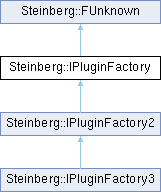
Public Member Functions | |
| virtual tresult PLUGIN_API | getFactoryInfo (PFactoryInfo *info)=0 |
| virtual int32 PLUGIN_API | countClasses ()=0 |
| virtual tresult PLUGIN_API | getClassInfo (int32 index, PClassInfo *info)=0 |
| virtual tresult PLUGIN_API | createInstance (FIDString cid, FIDString _iid, void **obj)=0 |
| Public Member Functions inherited from Steinberg::FUnknown | |
| virtual tresult PLUGIN_API | queryInterface (const TUID _iid, void **obj)=0 |
| virtual uint32 PLUGIN_API | addRef ()=0 |
| virtual uint32 PLUGIN_API | release ()=0 |
Static Public Attributes | |
| static const FUID | iid |
| Static Public Attributes inherited from Steinberg::FUnknown | |
| static const FUID | iid |
Detailed Description
Class factory that any plug-in defines for creating class instances: IPluginFactory
- [plug imp]
From the host's point of view a plug-in module is a factory which can create a certain kind of object(s). The interface IPluginFactory provides methods to get information about the classes exported by the plug-in and a mechanism to create instances of these classes (that usually define the IPluginBase interface).
An implementation is provided in public.sdk/source/common/pluginfactory.cpp
- See also
- GetPluginFactory
Member Function Documentation
◆ countClasses()
|
pure virtual |
Returns the number of exported classes by this factory. If you are using the CPluginFactory implementation provided by the SDK, it returns the number of classes you registered with CPluginFactory::registerClass.
◆ createInstance()
|
pure virtual |
Create a new class instance.
◆ getClassInfo()
|
pure virtual |
Fill a PClassInfo structure with information about the class at the specified index.
◆ getFactoryInfo()
|
pure virtual |
Fill a PFactoryInfo structure with information about the plug-in vendor.
Member Data Documentation
◆ iid
The documentation for this class was generated from the following file:
- /home/runner/work/lmms-fork/lmms-fork/plugins/CarlaBase/carla/source/includes/vst3sdk/pluginterfaces/base/ipluginbase.h
Generated on for LMMS by
 1.16.1